A favorite scent can sit on a dresser for years, especially when you rotate between bottles or save one for special occasions. So, does perfume expire? Yes, perfume can change over time, but an older bottle is not automatically unusable. How long it stays true to its original scent depends mostly on its ingredients, concentration, and storage.
For most shoppers, the practical answer is simple: a properly stored fragrance often smells good for three to five years after opening, and sometimes much longer. If the color, scent, and texture still seem normal, there is usually no reason to throw it away just because of its age.
Does Perfume Expire After Opening?
Perfume does not expire in the same way food does. It will not suddenly become bad on a specific date. Instead, oxygen, heat, light, and humidity gradually affect the fragrance oils and alcohol inside the bottle. This process is called oxidation, and it can alter the way a scent smells and performs.
An unopened bottle generally has the longest shelf life because less air reaches the liquid. Once you begin spraying it, small amounts of air enter the bottle over time. That does not mean you need to finish it quickly. It simply means storage matters more after opening.
Many Eau de Parfum and parfum-style fragrances hold up especially well because they contain a higher concentration of fragrance oils. Eau de Toilette and Eau de Cologne can still last for years, but their lighter compositions may show changes sooner. Citrus, green, and delicate floral notes are often less stable than richer woods, resins, amber, vanilla, and spice notes.
How Long Does Perfume Usually Last?
There is no single expiration timeline that applies to every fragrance. A well-made bottle kept in a cool, dark place may remain enjoyable for five years or longer after opening. Some collectors use properly stored vintage bottles that are decades old, although older fragrances are more likely to have changed from their original formula.
As a practical shopping and storage guideline, expect an unopened perfume to stay at its best for roughly three to five years or more. An opened bottle often performs well for two to five years, depending on how frequently it is used and where it is stored. These are guidelines, not deadlines.
The batch code printed on the box or bottle may help identify when a fragrance was produced. However, a production date alone cannot tell you whether the perfume is still good. A two-year-old bottle left in direct sunlight may have changed more than a six-year-old bottle stored in its original box inside a closet.
The fragrance concentration makes a difference
Fragrance concentration affects wear time on skin, but it can also influence how a scent ages in the bottle. Eau de Parfum typically has more aromatic material than Eau de Toilette, which can give it a little more staying power over time. Still, the formula matters more than the label alone.
A bright citrus Eau de Parfum may be more sensitive than a warm Eau de Toilette built around woods and musk. Treat concentration as one useful detail when choosing a fragrance, not a guarantee of shelf life.
Signs Your Perfume Has Gone Bad
Your nose is the best tool. If a fragrance still opens, develops, and dries down in a way that feels familiar, it is likely fine to wear. Compare it with your memory of the scent, or with a newer sample if you have one.
Watch for several clear changes:
- The liquid has become noticeably darker, cloudy, or has particles floating in it.
- The opening smells sharp, sour, metallic, vinegary, or unusually alcoholic.
- Familiar notes are missing, while a harsh or stale smell remains throughout the wear.
- The fragrance feels oily, sticky, or irritating when applied to skin.
Color changes deserve context. Some perfumes naturally deepen slightly over time, particularly formulas with vanilla, amber, natural extracts, or darker juice. A small shift from pale gold to deeper gold does not necessarily mean the bottle has spoiled. Cloudiness, sediment, and a major scent change are more meaningful warning signs.
If a perfume causes redness, burning, or itching, stop using it on skin. Ingredient changes over time can make a fragrance less pleasant or more irritating, even if it still smells acceptable in the air. You can test an uncertain bottle on a paper blotter first, but do not force yourself to wear a scent that no longer feels right.
Where You Store Perfume Matters Most
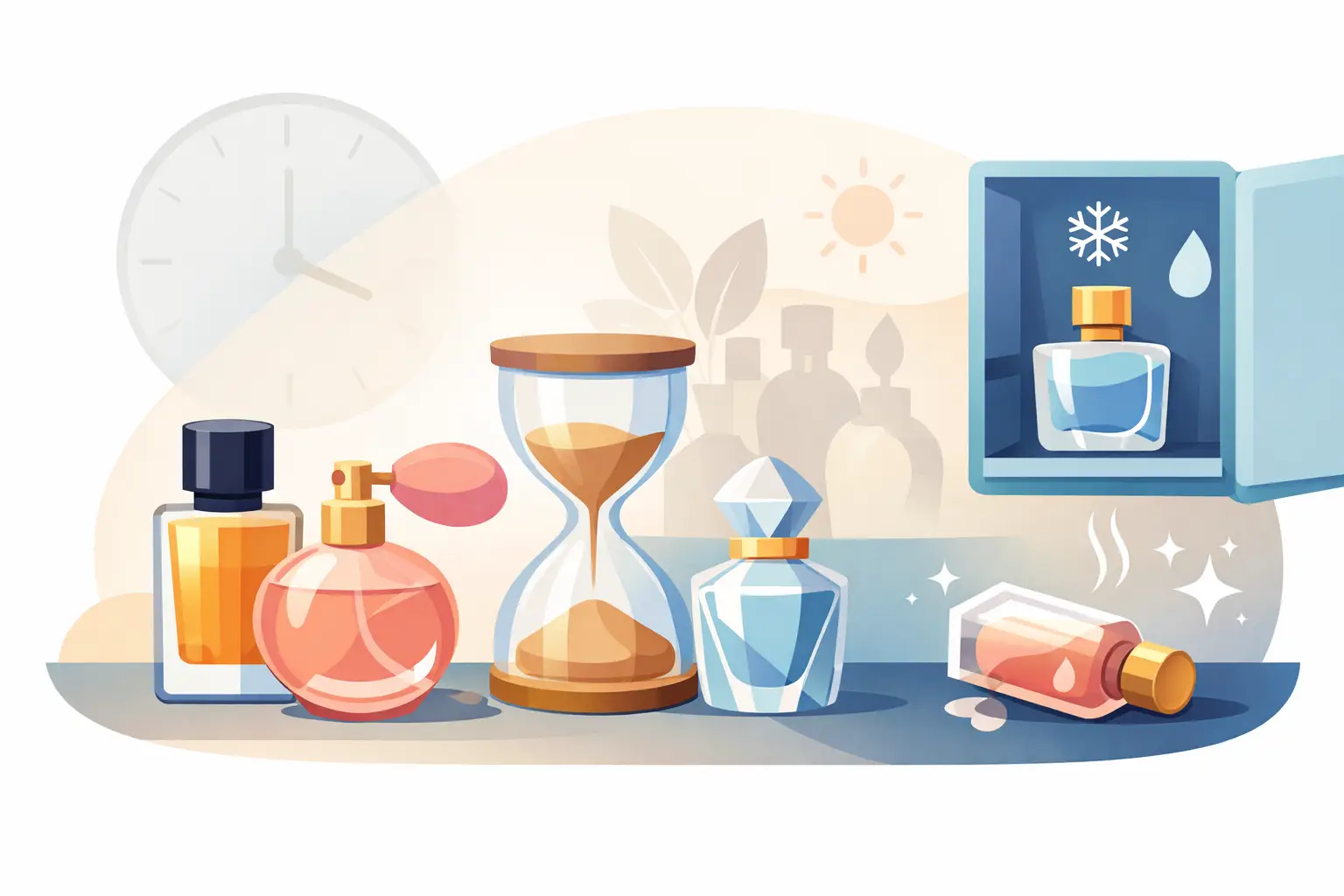
The bathroom looks convenient, but it is one of the worst places to keep a fragrance collection. Hot showers create repeated temperature swings and humidity. Windowsills, cars, and open shelves near lamps have the same problem: too much heat or light.
The best place for perfume is a cool, dry, dark location with a fairly stable temperature. A bedroom drawer, closet shelf, or cabinet away from direct heat works well. Keeping the bottle in its original box provides extra protection from light and makes it easier to store safely.
Always replace the cap after use if the bottle has one. Keep atomizer bottles upright to reduce the risk of leaks and evaporation. Avoid transferring fragrance into decorative bottles unless they are designed for perfume and protect the liquid from air and light.
Refrigerating perfume is usually unnecessary. Frequent movement between room temperature and a refrigerator can create avoidable temperature changes, and a kitchen refrigerator may expose the bottle to moisture and food odors. For most homes, a dark drawer or closet is the simpler, more reliable choice.
Buy bottle sizes you can realistically use
A larger bottle can offer better value per ounce, but only if you will use it. If you like switching scents often, a smaller bottle may make more sense than keeping several oversized bottles open for years. This is especially true for fresh summer fragrances and delicate citrus-forward scents.
For a daily signature fragrance, a larger size can be a smart purchase. For a gift, a new scent, or a fragrance you plan to wear occasionally, a smaller size lowers the chance of waste. The right choice depends on how often you spray, not just the price tag.
Can You Still Use an Old Bottle?
Sometimes an older perfume does not smell exactly as it did when new, yet it remains pleasant. A softened citrus opening or a slightly deeper vanilla note may not bother you. If the fragrance smells good, sprays normally, and does not irritate your skin, you may decide it is still worth wearing.
If the scent has turned sour, flat, or harsh, it is time to replace it. Do not try to fix a changed perfume by adding water, alcohol, or other ingredients. That can further disturb the formula and make the bottle unsafe or unpleasant to use.
For fragrances with personal value, keep the bottle as a display piece after the scent is no longer wearable. But for everyday use, a fresh bottle gives you the performance and character the perfumer intended.
A Better Way to Protect Every Bottle
Good fragrance care starts before the first spray. Purchase from a dependable seller, check that the packaging and bottle arrive in good condition, then store your fragrance away from heat and sunlight from day one. Avoid leaving bottles in a hot delivery area, vehicle, or bathroom counter.
At Perfumes Trade, shoppers can choose from popular men’s, women’s, and unisex fragrances in concentrations that fit their routines, from lighter Eau de Toilette to longer-wearing Eau de Parfum. Whether you are buying a daily scent or adding to a collection, choose a size you will enjoy using and give it a cool, dark place to live.
A perfume is made to be worn, not saved indefinitely. Spray the fragrances you love, store them with care, and let your senses – not just the date on the box – tell you when it is time for the next bottle.