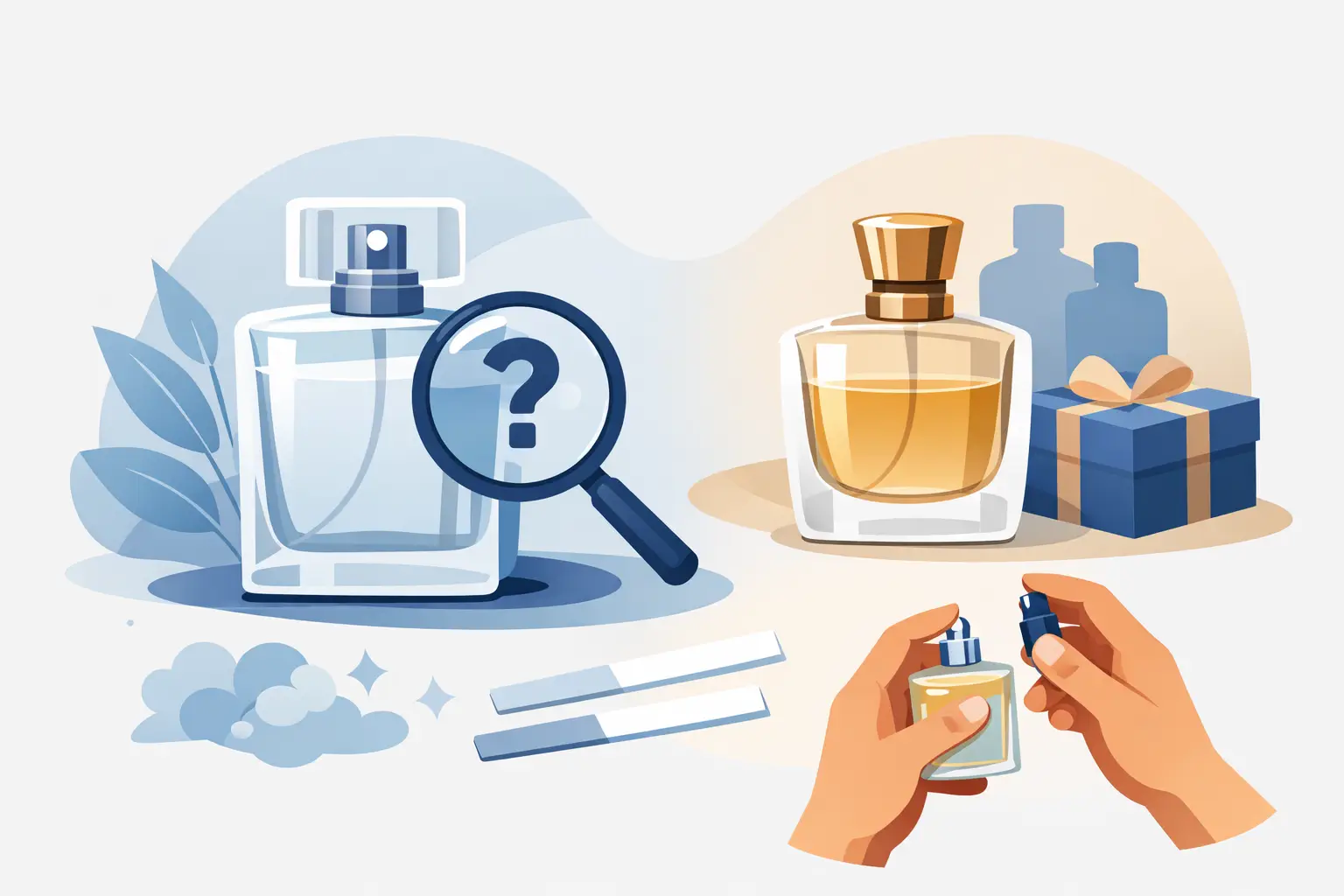
A 3.4 oz bottle may look like the obvious better deal, but it is only a smart buy if you will actually use it. Knowing how to choose bottle size helps you avoid a fragrance that sits unopened for years, while still getting the value you want from a favorite scent.
For most shoppers, the right choice comes down to four practical questions: How often will you wear it? Have you tried the scent before? What concentration are you buying? And do you need a bottle for home, travel, or a gift? Once you answer those questions, bottle sizes become much easier to compare.
Start With the Sizes You Will See Most Often
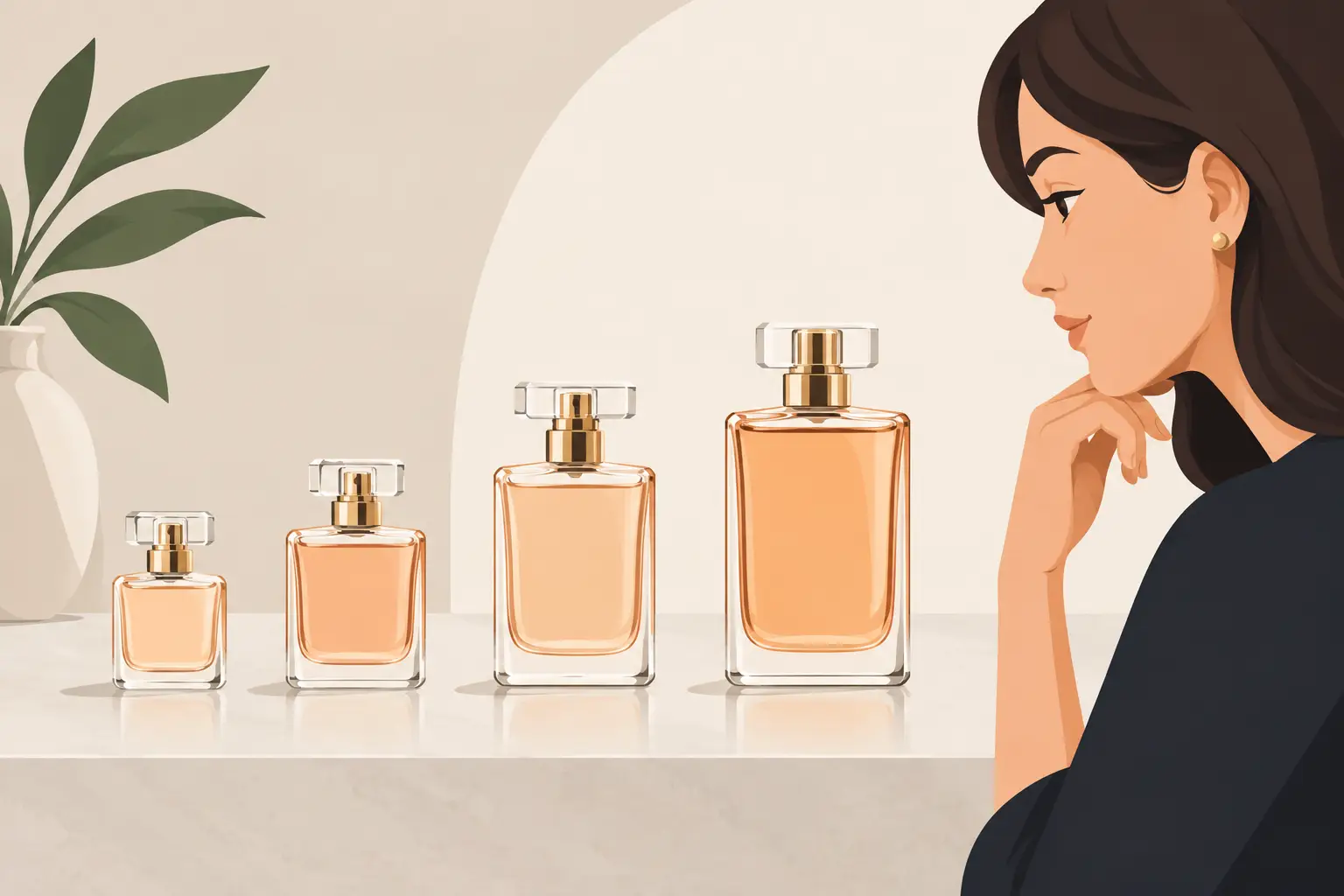
Fragrance bottles are usually labeled in both fluid ounces and milliliters. The most common retail sizes are 1 oz or 30 mL, 1.7 oz or 50 mL, and 3.3 to 3.4 oz or 100 mL. Some brands also offer 0.5 oz, 2.5 oz, 4.2 oz, 6.7 oz, and larger bottles.
A 30 mL bottle is compact and low-commitment. A 50 mL bottle is often the middle ground for shoppers who already know they like a fragrance. A 100 mL bottle usually offers the best price per ounce, especially for an everyday signature scent.
Do not judge the bottle only by how it looks in a product photo. A 100 mL bottle contains more than three times as much fragrance as a 30 mL bottle. The price difference may feel modest, but the amount of product is not.
How to Choose Bottle Size Based on How You Wear It
Think about your actual routine rather than the version of your routine you hope to have. If you wear one fragrance nearly every day, a larger bottle can be practical and cost-effective. If you rotate between several perfumes or colognes, a smaller bottle may be the better purchase.
A typical fragrance spray uses roughly 0.1 mL per spray, though atomizers vary. At four sprays a day, a 30 mL bottle can last around two to three months. A 100 mL bottle can last much longer than a year. That is great for a scent you reach for constantly, but less useful for a fragrance reserved for occasional nights out.
Choose a smaller size when you are buying a new-to-you scent, building a varied collection, shopping for a seasonal fragrance, or looking for a convenient bottle to keep in a bag. Choose a larger size when the fragrance is already proven in your rotation and you expect consistent use.
For a First Purchase, Keep the Commitment Reasonable
Even a highly rated fragrance can wear differently on your skin than it does on someone else. Body chemistry, climate, and the number of sprays you use all affect the experience. A scent that feels fresh for a quick test may become too sweet, powdery, or intense after several hours.
If possible, start with the smallest available full bottle for a fragrance you have not worn before. This is especially sensible with bold oud, amber, leather, gourmand, and high-projection scents. You can always move up to a larger bottle after you know it earns a regular place in your lineup.
For Everyday Wear, Compare the Cost Per mL
Larger bottles often cost more upfront but less per milliliter. For example, a 100 mL bottle that costs 50% more than a 50 mL bottle gives you twice as much fragrance. If it is a scent you use four or five days a week, that larger size is usually the better value.
Still, the lowest price per mL is not automatically the lowest-cost choice. Spending less on a bottle you will finish is better than spending more for extra product that goes unused. Value is about cost, use, and enjoyment together.
Match the Bottle Size to the Concentration
Bottle size and fragrance concentration should be considered together. Eau de Toilette, Eau de Parfum, Eau de Cologne, and extrait-style fragrances can all be used differently because their strength and wear time vary.
An Eau de Toilette often feels lighter and may invite more sprays or reapplication during the day. If you wear EDT regularly, a 100 mL bottle can make sense. Eau de Parfum usually has a stronger concentration and may require fewer sprays, so a 50 mL bottle can last longer than expected.
With especially rich Eau de Parfum or extrait formulas, bigger is not always better. If two sprays are enough for your workday or evening plans, a 30 mL or 50 mL bottle may provide plenty of use. The goal is not to buy the biggest bottle. It is to buy the amount that fits your spray habits.
Consider Travel, Storage, and Daily Convenience
A full-size bottle is ideal for a dresser or bathroom shelf, but it is not always convenient outside the house. For carry-on travel in the United States, fragrance liquids must be in containers of 3.4 oz or less. A 100 mL bottle meets that limit, but the bottle must still fit comfortably in your liquids bag.
Small bottles are easier to pack, less risky to carry, and simpler to replace if lost or damaged. They also work well for commuters, gym bags, and keeping a fragrance at the office. If your favorite scent is only sold in a large format, use a travel atomizer for on-the-go touch-ups rather than carrying the full bottle.
Storage matters as well. Fragrance lasts best when kept upright in a cool, dry place away from direct sunlight and temperature swings. A large bottle stored properly can remain enjoyable for years, but a bottle left on a sunny bathroom counter may lose its character sooner.
Choose the Right Size for Gifts
When you are giving fragrance, the recipient’s familiarity with the scent matters more than the bottle’s visual impact. A 30 mL or 50 mL bottle is a thoughtful choice for someone who is trying a new brand, exploring a different concentration, or building a collection.
A 100 mL bottle works well when you know the person already wears that exact fragrance or has mentioned wanting a replacement. For a close family member or partner with a clear favorite, the larger size communicates usefulness and value. For a coworker, friend, or first-time recipient, a smaller bottle is usually the safer fit.
Pay attention to their habits, too. Someone who wears one cologne every day will likely appreciate a larger bottle. Someone with a shelf full of rotating perfumes may prefer a smaller one that adds variety without creating clutter.
Avoid These Common Bottle-Size Mistakes
The first mistake is buying large because it seems like a bargain, without checking whether the scent is one you will wear often. The second is buying too small for a dependable daily fragrance, then paying more over time for repeated replacements.
Another common issue is confusing bottle size with scent strength. A 3.4 oz Eau de Toilette is not necessarily stronger than a 1.7 oz Eau de Parfum. The number on the bottle tells you how much liquid you receive. The concentration tells you more about the fragrance formula and likely performance.
Finally, do not overlook duplicate purchases. Before ordering, check what you already own. You may already have a similar fresh citrus scent for daytime, a warm amber option for evenings, or a versatile woody fragrance that covers the same role. A new bottle should fill a real gap or replace something you use, not simply add volume to the shelf.
A Simple Buying Rule That Works
If you are uncertain, choose 30 mL for an unfamiliar fragrance, 50 mL for a scent you like and expect to wear regularly, and 100 mL for a proven favorite you use often. Adjust that rule for concentration: stronger formulas can justify a smaller bottle, while lighter daily scents may be worth buying larger.
At Perfumes Trade, shoppers can compare familiar brands, concentrations, and bottle sizes without department-store pricing. Look beyond the initial price, consider how you will use the fragrance, and choose the size that gives you the most wear for your money.
The best bottle size is the one you will enjoy finishing. Buy with your routine in mind, store it well, and leave room in your collection for the next scent that earns a place there.